Here are a few:

Here are 4 samples : Influent - what comes into the plant - it's mostly water.
Primary effluent - after treatment through the primary clarifiers
Aeration Basin sample - this is using the activated sludge with lots of organisms
Effluent - is what is released into Lake Superior
Primary effluent - after treatment through the primary clarifiers
Aeration Basin sample - this is using the activated sludge with lots of organisms
Effluent - is what is released into Lake Superior
Which sample do you think has the highest TSS (total suspended solids)?
The correct answer is the Aeration Basin sample. It would likely have one about 2000 mg/L. The other values could be about 250 for the influent (note: that sample is looking a bit darker than usual. It wasn't collected that day), 100 mg/L in the primary effluent and the effluent would be about 10 mg/L.
Here is a view of the Belt Filter Press. The sludge cake are the solids that were concentrated and then removed. These are what the organisms didn't consume but the organisms do help to greatly reduce the organic materials. The sludge cake doesn't smell. It is not of good enough quality to be used on farm fields. It is trucked the landfill. Trucks also leave here carrying debris trapped at the screen building and the through the grit chamber.
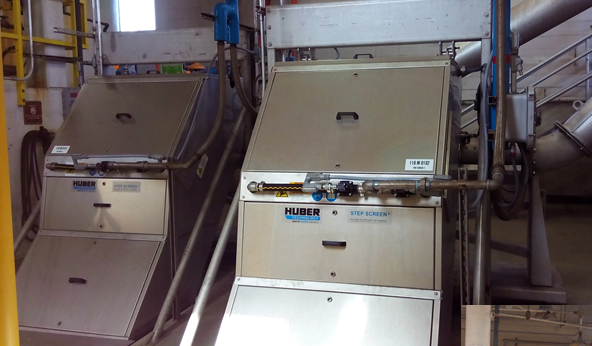
Here are our new Huber Step Screens that were installed this winter. They are shiny and new and do the incredible work of removing materials down to 1/8". Our previous screens only removed down to 1/4". We are happy to report they are doing well.
Here is an inside look.

With looking closely you can see a goldfish and a bandaid among the debris.
Speaking of goldfish. We do have a goldfish here that we've put in effluent and she is doing fine. She likes to visit with the students when they come. Her name is
Sue R. Plant.
Remember, the effluent is not drinkable but it's safe for swimming and safe for fish and aquatic organisms.
